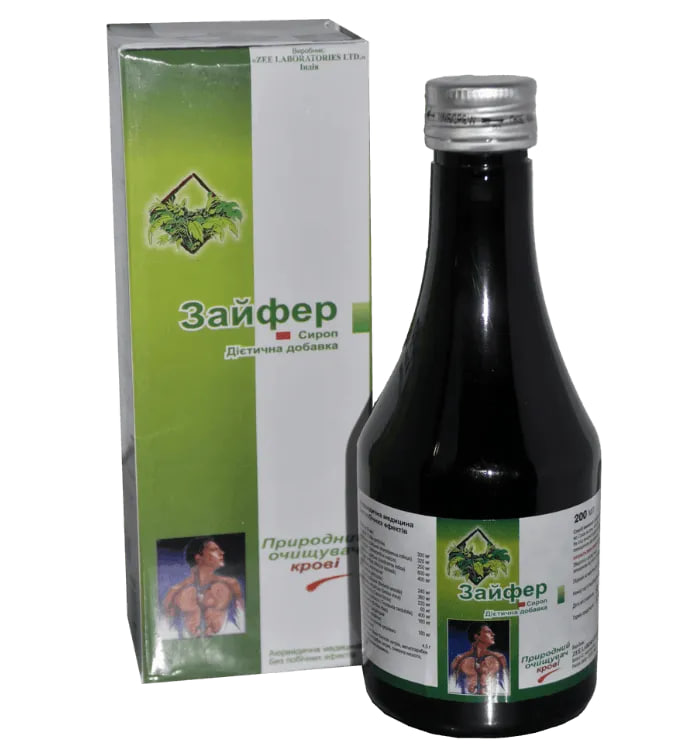
Recommended as part of a dietary regimen to support natural blood purification in cases of digestive disorders, skin eruptions, and itching.
Helps gently detoxify the body, improve digestion, and promote overall well-being.
Manjistha (Rubia cordifolia) — 300 mg
Hemidesmus indicus (Indian sarsaparilla) — 320 mg
Sphaeranthus indicus (Indian thistle) — 250 mg
Azadirachta indica (Neem) — 600 mg
Albizzia lebbeck — 400 mg
Andrographis paniculata — 240 mg
Berberis aristata (Indian barberry) — 360 mg
Smilax china (Chinese sarsaparilla) — 220 mg
Cassia fistula — 60 mg
Tinospora cordifolia — 400 mg
Embelia ribes — 180 mg
Pterocarpus santalinus (Red sandalwood) — 160 mg
Flavored sugar syrup base (pineapple) — 4.5 g
Skin disorders: demodicosis, acne (Acne vulgaris), boils and furunculosis, redness, and flaking of the skin
Atopic dermatitis, eczema, psoriasis
Helminth infections (nematodes)
Enzyme deficiency and other digestive disorders
Intoxication due to food poisoning
A classical Ayurvedic herb known for over 4,500 years as a “blood purifier.”
Since many skin problems in Ayurveda are linked to “impure blood,” Neem has become one of the main plants for treating skin diseases ranging from psoriasis to demodicosis.
In 1959, scientists isolated a compound called Azadirachtin from Neem — responsible for its powerful therapeutic and pharmacological effects.
How Neem Works:
When taken orally (as a decoction, capsule, powder, or syrup), its active compounds — primarily Azadirachtin — are absorbed into the bloodstream.
About 70% of Azadirachtin is delivered to the skin, where it provides antibacterial, anti-demodex, and anti-inflammatory actions.
The remaining 30% acts in the liver and gallbladder, helping to cleanse, reduce inflammation, improve bile flow, inhibit harmful intestinal bacteria, and promote healthy gut flora.
✅ Benefits of Neem:
Improves digestion at all stages.
Provides antiparasitic and antibacterial protection (both in the skin and gastrointestinal tract).
Regulates sebaceous gland activity and promotes healing of skin damaged by mites, bacteria, and parasites.
Commonly known as the “King of Bitters” or “Bile of the Earth.”
This plant has a strong effect on the liver and gallbladder, promoting detoxification and bile flow.
It also exhibits antibacterial, antiparasitic, antihelminthic, and anticancer properties.
A medicinal plant widely used in Ayurvedic medicine for its detoxifying and rejuvenating effects.
Actions of Cassia fistula:
Purifies the blood and removes toxins and waste from the body.
Improves digestion; acts as a mild laxative and choleretic.
Beneficial for diabetes, dysentery, liver disorders, and metabolic imbalance.
Deep internal cleansing improves skin condition, reducing inflammation, bacteria, and parasites.
Stimulates collagen synthesis, delays skin aging, and promotes faster healing of wounds and cuts.
Effective in acne, dermatitis, psoriasis, demodicosis, seborrhea, and other skin problems.
Cassia fistula is a traditional component of powerful “blood purifiers” in Ayurveda and other natural healing systems worldwide.
ZEE Laboratories Ltd
Behind 47, Industrial Area, Paonta Sahib – 173025, India
Minimum recommended course: 30 days
Maximum recommended course: 3 months
Erythematous form: 5 ml in the morning for 1 month
Erythematous-papular form: 10 ml in the morning for 1 month
Papulopustular form: 10 ml in the morning and evening for 2–3 months
Nodular form: 10 ml in the morning and evening for 3 months