🇺🇦
10%
від замовлень відправляємо на
ЗСУ
💙💛
1 from
Sign in, to leave a review

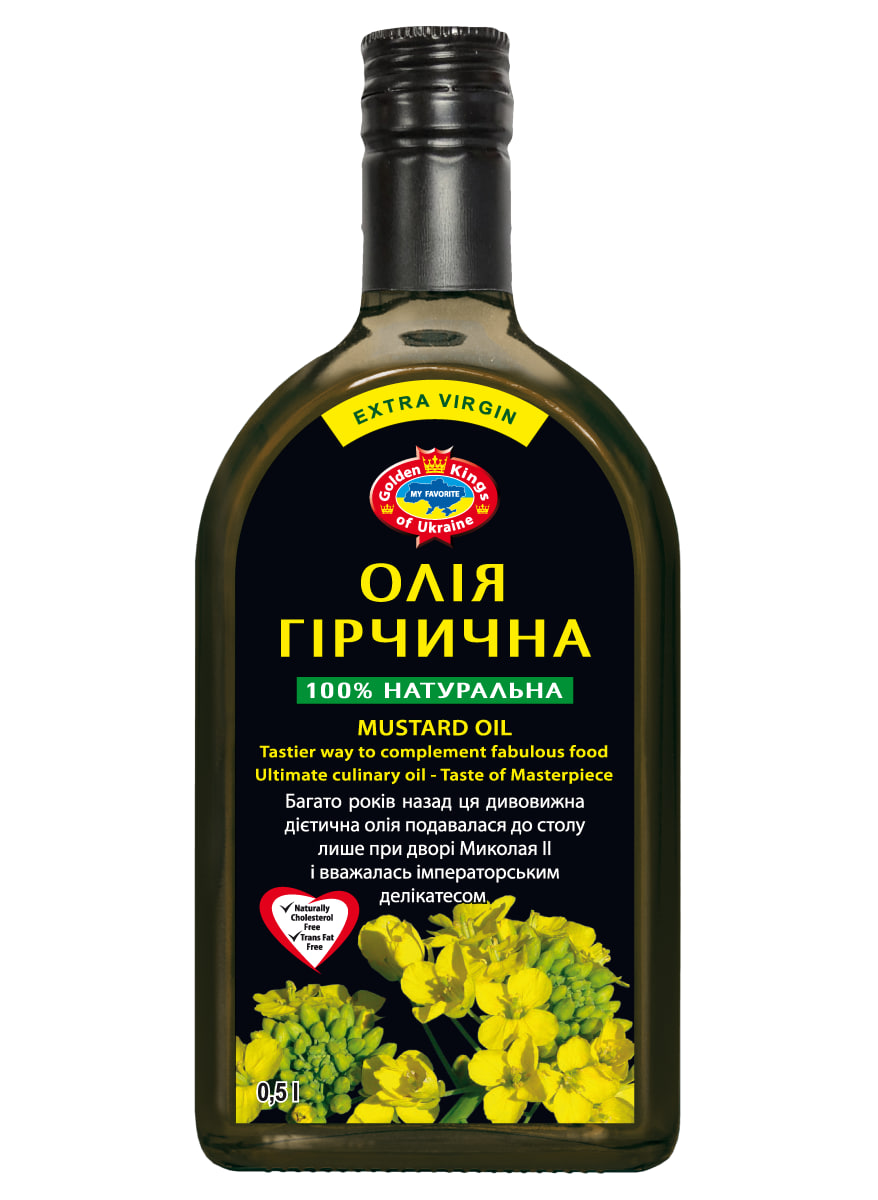
First Cold-Pressed Mustard Seed Oil, Unrefined 500 ml

Natural unrefined mustard seed oil mechanically produced using the first cold-press method to preserve the natural characteristics of mustard seeds.

No solvent extraction, alkali treatment, hexane fraction, chemical additives or artificial colourants are used during production.

The oil has a distinctive aroma and pleasantly piquant flavour. It can be used for salads, vinaigrettes, vegetables, grains, potatoes, cold and hot dishes, home baking and preserving.

Description

Mechanically produced using the first cold-press method

This natural dietary plant oil is made from mustard seeds using a first cold-press production process designed to minimise processing.

The oil is produced without solvent extraction or alkali treatment and without the use of hexane fraction, chemical additives or artificial colourants. This method helps preserve the natural characteristics of the plant material.

Unrefined plant oils are traditionally valued for their minimal processing and the natural components originating from the seeds.

Mustard seed oil has a distinctive aroma and pleasantly piquant flavour with versatile culinary properties. Historically, mustard oil has also been valued as a speciality food.

Mustard seed oil in cooking

Mustard oil pairs particularly well with fresh vegetables and herbs. It can be used as a dressing for vegetable salads and vinaigrettes, added to boiled potatoes and grains, or used to complement cold appetisers.

Mustard seed oil can be used:

• in vegetable salads and vinaigrettes
• with grains and boiled potatoes
• in cold and hot dishes
• for baking bread and other baked goods
• for home preserving
• for preparing vegetables
• in pancakes and fritters
• for preparing fish, meat and potatoes

When incorporated into baked goods, mustard oil can add a distinctive aroma and an attractive golden tone.

It can be used on its own or blended with other vegetable oils.

Natural Components of Mustard Seed Oil

According to the supplied product information, mustard seed oil naturally contains a variety of components, including:

• unsaturated Omega-3 and Omega-6 fatty acids
• vitamins A, B6, D, E, K, P and PP
• magnesium
• sulphur
• iron
• sodium
• potassium
• calcium
• phytoncides
• glycosides
• tocopherols
• phospholipids
• sinigrin
• carotene
• beta-sitosterol

Unsaturated fatty acids are an important nutritional component of plant oils. Mustard seed oil contains Omega-3 and Omega-6 fatty acids as part of its natural lipid profile.

Vitamins and Other Components

Vitamin A contributes to a number of normal physiological processes, including normal immune function.

Vitamin E is an antioxidant that contributes to the protection of cells from oxidative stress.

Vitamin B6 contributes to normal protein and energy metabolism.

Vitamin K contributes to normal blood clotting.

Carotenoids are naturally occurring biologically active compounds found in plant materials.

Tocopherols and phospholipids are natural components found in vegetable oils.

Traditional Use

Mustard seeds and mustard oil have a long history of use in traditional diets and folk practices.

Traditional sources have mentioned mustard oil in connection with digestion, metabolism, cardiovascular wellbeing and general vitality. Mustard oil has also traditionally been used externally and for massage.

These references describe traditional use and do not mean that edible mustard seed oil is a medicine or is intended to diagnose, treat, cure or prevent disease.

Benefits

• first cold pressed
• mechanically produced
• unrefined
• no solvent extraction
• no hexane fraction used
• no added artificial colourants or chemical additives
• distinctive piquant flavour and aroma
• contains naturally occurring components of mustard seeds
• versatile culinary use
• suitable for salads, baking and home preserving

Ingredients

100% mustard seed oil, mechanically produced using the first cold-press method.

How to use:

Use according to taste in salads, vinaigrettes, vegetables, herbs, grains, potatoes and cold or hot dishes. It can also be used for baking, home preserving and preparing a variety of foods.

Traditional references to therapeutic or preventive uses of mustard oil are not a substitute for professional medical advice.
Shipping
Payment